
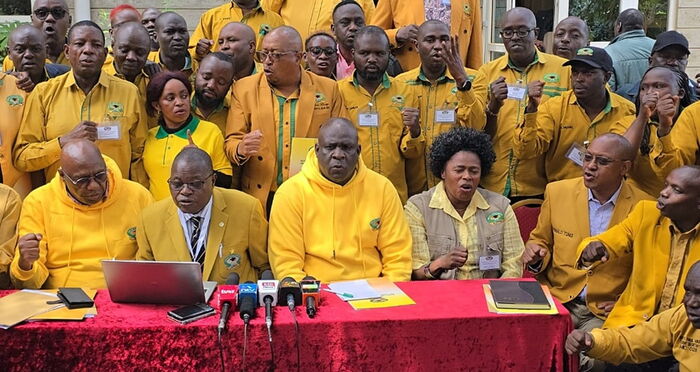
The Kenya Union of Post-Primary Education Teachers (KUPPET) has presented its case for Junior School (JS) autonomy to the National Assembly Education Committee, which is considering a governance framework for the schools.
A KUPPET delegation appeared before the committee, chaired by Tinderet MP Julius Melly. It laid out what the union considers the basic conditions for a well-governed and adequately resourced JS system.
Four main demands
KUPPET asked for:
- a comprehensive legal framework for Junior Schools;
- a distinct governance structure;
- adequate teacher staffing; and
- equitable allocation of resources.
The union told the committee that Kenya should move beyond transitional arrangements. It wants a clearly defined institutional framework that gives Junior Schools the administrative capacity, accountability structures and resources to deliver on their mandate.
Clarity on who governs
KUPPET stressed the need to settle who governs, manages and answers for Junior Schools. A well-defined governance structure, it argued, would clarify administrative responsibilities, strengthen accountability and give teachers, parents and learners a more predictable environment.
Without a coherent legal and administrative framework, it warned, questions on management, professional responsibilities and resource distribution could become lasting problems in implementing education reforms.
Staffing, facilities and funding
As Kenya advances Competency-Based Education (CBE), the union said Junior Schools need enough teachers to meet curriculum demands and the varied learning needs of learners. It listed teacher deployment, institutional leadership, laboratories and learning materials as issues that belong in the autonomy discussion.
KUPPET cautioned that granting schools more administrative responsibility without the human and financial resources to match could create structures that exist on paper but struggle to deliver results.
Keeping politics out
The union also called for education policy to be guided by professional expertise, research and the long-term interests of learners rather than political considerations. It said the effects of politicising education may not be immediately visible but can emerge over time through weakened institutions, inconsistent policy and reduced confidence in the system.
KUPPET commended the committee for continuing to engage education stakeholders. It expressed hope that the concerns of teachers, parents and learners will be reflected in the committee’s final report.
Related Posts
- TSC November 2026 Salaries: Payday, What to Check on Your Payslip and Promotion Arrears
- Ruto Says 2026 Exams Were Printed in Kenya, but Police Recorded 71.3 Tonnes of KCSE Materials From Greece
- KNEC CP2 Portal: Registration, Application, Deployment Letters, and Account Access Guidelines
- KNEC CBA Portal: How to Upload Learner Scores in 2026
- KJSEA 2026 Has Ended: What Happens Next for Grade 9 Learners