
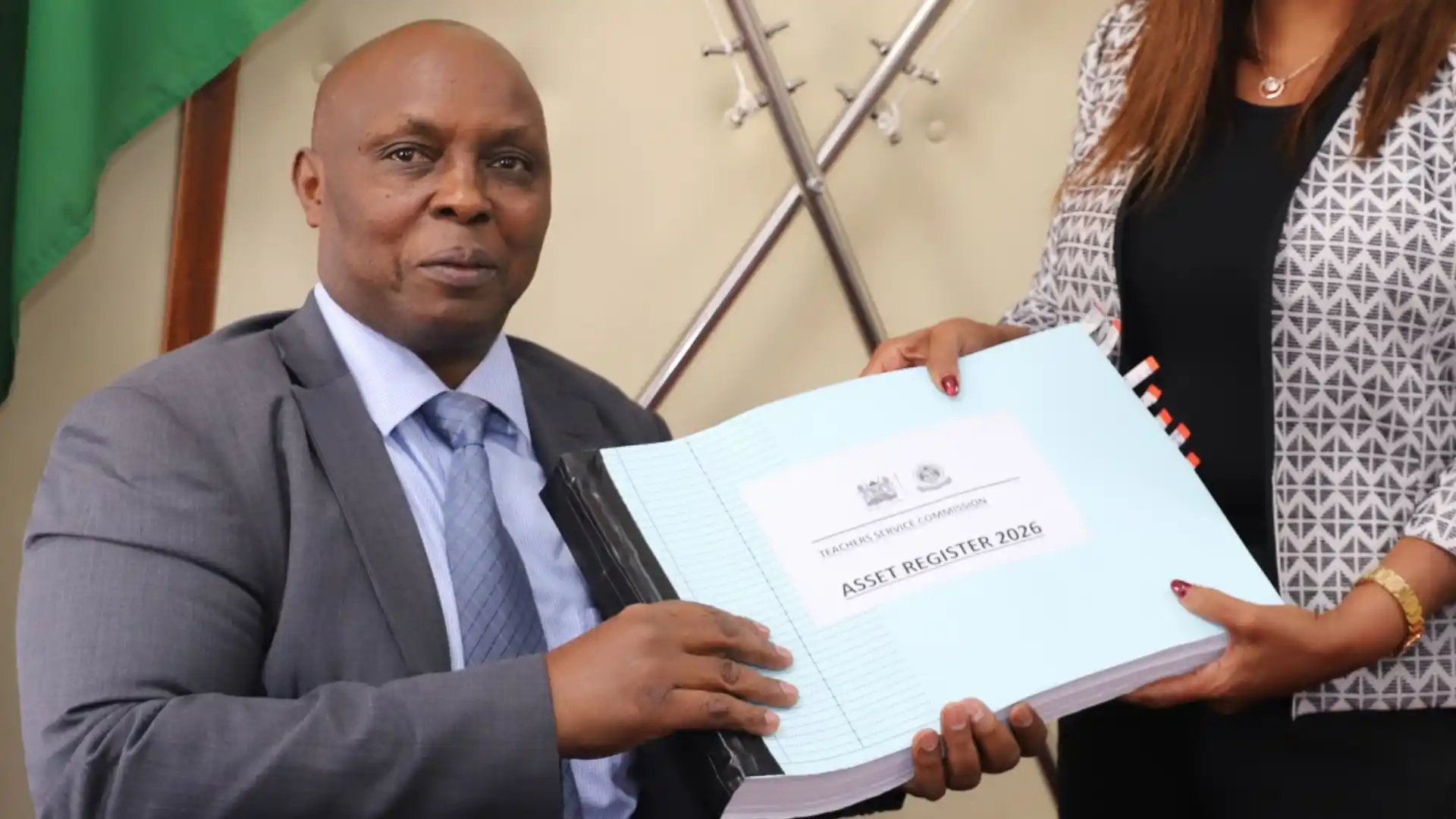
The Ayabei appointment case has teachers asking a practical question: will the High Court challenge to Cheptumo Ayabei's appointment as Teachers Service Commission (TSC) Secretary and CEO slow down the new Career Progression Guidelines? The petition was filed days after TSC announced the appointment, effective 16 November 2026, while teachers wait for instructions on how promotions will run under the revised framework.
The petition concerns how the CEO was recruited. It doesn't challenge the guidelines, which President William Ruto says the Salaries and Remuneration Commission (SRC) has approved. Teachers' worry is about timing: a chief executive who has only just taken office is facing a court challenge, and a promotion exercise is waiting for the secretariat to put it into motion.
What the Ayabei appointment case seeks
Fredrick Bikeri filed the petition at the High Court in Nairobi. He wants the court to suspend Ayabei's appointment and bar him from performing the functions of Commission Secretary and CEO until the case is decided, with an acting official taking charge in the meantime. The petition also asks the court to declare the appointment unlawful and order a fresh recruitment.
Bikeri questions how five candidates were shortlisted from 124 applicants. He wants TSC to disclose the shortlisting criteria, candidates' scores, the interview assessment matrix and the final recruitment report. He also alleges the interview timetable was changed and raises questions about duties Ayabei performed before his appointment.
Justice David Mburu has certified the petition urgent and directed TSC and Ayabei to respond within three days of service. A mention is fixed for 23 November 2026. A mention is a procedural date at which the court gives directions, so the request to suspend the appointment is yet to be decided.
TSC's defence of the recruitment
TSC says the process was lawful and competitive. In its statement, the commission said Ayabei emerged the best of the five shortlisted candidates. Chairman Dr Jamleck Muturi John said the recruitment followed the Constitution and the Teachers Service Commission Act, 2012, and was transparent, accountable and merit-based.
This was the commission's second attempt at filling the post. The High Court directed on 17 September 2026 that recruitment start afresh, and TSC re-advertised the position on 29 September. The post had no substantive holder since Nancy Macharia retired in June 2025, with Dr Evaleen Mitei acting in the interim.
TSC announced the appointment on 16 November. Ayabei, who joined the commission in 1999 and rose to Director of Finance and Accounts, took over from Mitei on 20 November and was sworn in at the Supreme Court the same day.
Where the Career Progression Guidelines stand
TSC signed the revised guidelines with KNUT, KUPPET and KUSNET on 18 June 2026, meeting a commitment in the 2025–2029 Collective Bargaining Agreement. The draft proposed cutting career levels from 56 to 43 and creating separate pathways for classroom teachers and those pursuing administrative roles. The framework replaces the 2018 guidelines, which teachers blame for long stays in the same job group.
On 5 October, President Ruto said the guidelines were awaiting SRC approval. On 12 November, speaking in Mombasa, he said the SRC had approved them. He announced an additional KSh 4 billion for career progression and said 50,000 teachers will be promoted in the current financial year.
TSC had earlier advertised 34,016 promotion vacancies for the 2026/27 cycle. The breakdown of posts beyond that figure is pending, as is a circular setting out how the 50,000 target will be met.
Why teachers fear a delay
Teachers stuck in one job group despite added experience and qualifications are watching the calendar. Implementation needs circulars, interview schedules and appointment letters, and all of that runs through a secretariat whose new chief executive is facing a court challenge.
The concern isn't that the case has halted anything. It's that uncertainty at the top could add weeks to a process teachers have already waited years for. Many want a firm implementation timetable more than any further assurance.
What KNUT wants from the new CEO
KNUT First Vice National Chairman Malel Lang'at has urged Ayabei to prioritise implementation of the reviewed guidelines alongside teacher welfare and professional development. He wants the remaining phases of the 2025–2029 CBA implemented without delay, and recruitment and deployment carried out transparently and free of political interference.
Wishing the new CEO success, Lang'at said the commission should uphold teachers' dignity and show real progress on workplace concerns. His message places career progression among the first items on the new administration's desk, not something to park during the leadership transition.
What teachers should do now
Watch the TSC website, tsc.go.ke, for the implementation circular. It will carry the dates, posts and procedure that count. Keep your TPAD records and your academic and professional documents current, and confirm your job group and years served in your present grade. Our guide on preparing your promotion application covers the paperwork in detail, and teachers who sat September's interviews can follow the promotion interview results.
Treat unofficial letters with care. In July 2026, TSC dismissed as fake a circulating letter that claimed the SRC had rejected the guidelines. Official communication comes from TSC and the SRC, not from social media, and our guide to TSC recruitment scams explains how to spot fake letters and payment demands.
The 23 November mention will show how quickly the court intends to move. Meanwhile, the guidelines rest on SRC approval and the President's promise of 50,000 promotions. What teachers need next is a TSC circular with dates and procedure, and how quickly it arrives will be the first practical measure of the new administration.