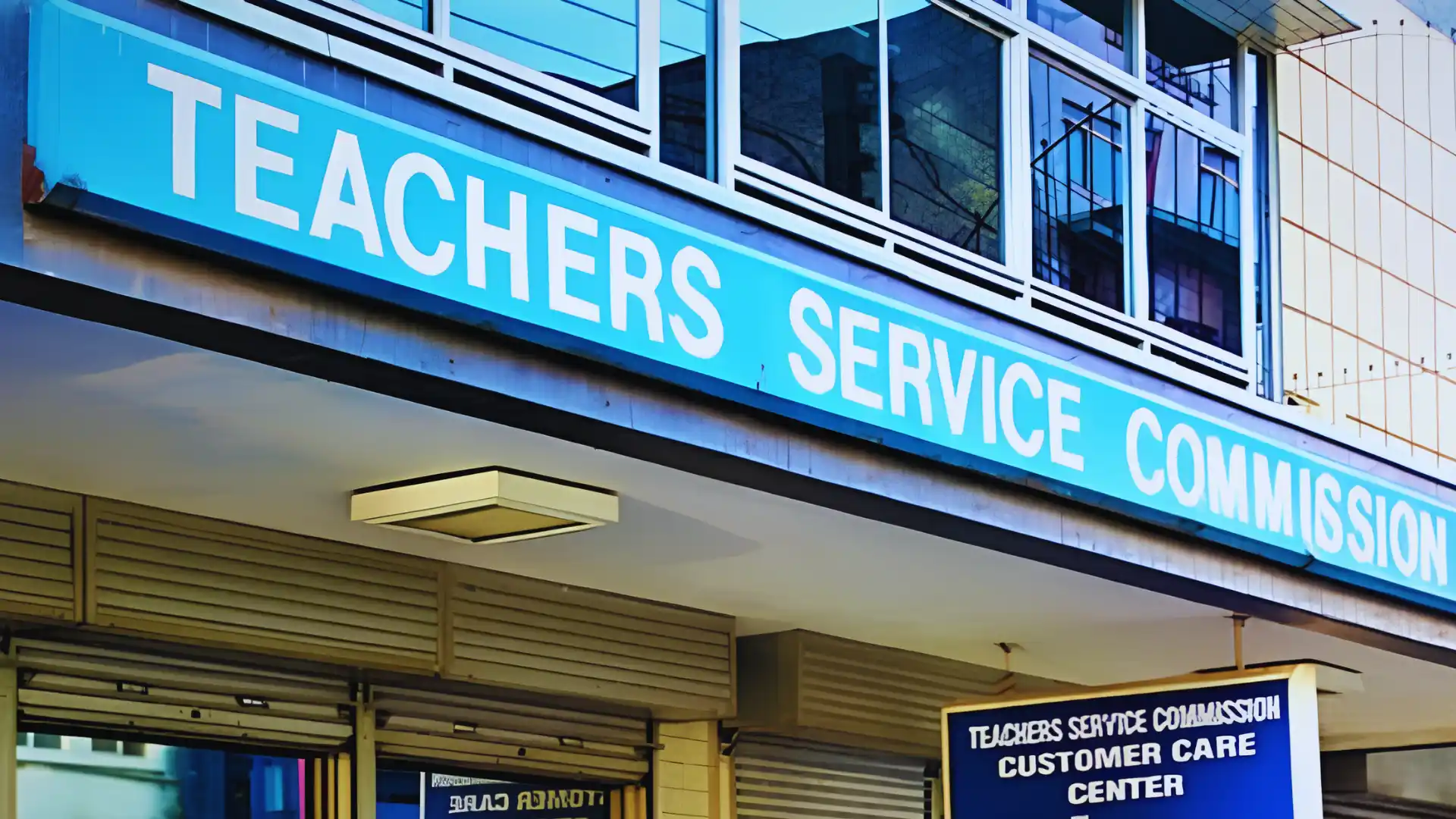
TSC five-year licence renewal is one step closer. On Thursday 26 November 2026, the Teachers Service Commission met Parliament's Committee on Delegated Legislation to review proposed amendments to the Code of Regulations for Teachers. The package would require teachers to renew their licences every five years and would lower the minimum KCSE grade for diploma teacher training from C+ to C plain.
None of this is in force yet. The current rules apply until TSC finalises the amendments and publishes them in the Kenya Gazette.
What TSC took to MPs
In a statement after the meeting, TSC said the proposed amendments follow public consultations held in April and May 2026 and focus on Regulation 20 and related provisions. Regulation 20 sets the academic and professional qualifications required for registration as a teacher.
The commission said the review would bring entry qualifications in line with Competency-Based Education, strengthen oversight of teacher training, tighten certification renewal and professional competency standards, and change how disciplinary matters involving teachers are handled.
How five-year licence renewal would work
The licensing plan was announced in June 2026 by then acting CEO Evaleen Mitei. Registration alone would no longer be enough to keep practising. Teachers would complete a five-year cycle of Teacher Professional Development, known as TPD, and that completion would lead to renewal of the licence.
Mitei said TPD would be free and mainly online, with a limited number of face-to-face sessions, and that TSC is developing a digital learning management system to host the modules and let teachers track progress. She also tied the plan to teachers seeking jobs abroad, saying Kenya does not licence teachers in the way other professions are licensed.
The cost pledge answers an old grievance. When TPD began in 2021, teachers paid Sh6,000 per module out of pocket at contracted universities, and participation was largely voluntary. TSC already offers free online courses through T-Learn.
C plain entry for diploma teacher training
The draft amendments would lower the minimum KCSE mean grade for diploma teacher education from C+ to C plain. They cover diplomas in early childhood teacher education, including the Montessori route, primary, secondary, technical, special needs and adult and continuing teacher education. Applicants with disabilities would qualify with a minimum of C minus in certain courses.
The amendments also recognise single teaching subjects, including new CBE learning areas, and add age-based pathways for specialised special needs training. Subject-specific requirements remain for STEM subjects, languages and arts.
Colleges already admit many diploma trainees at C plain. Reforms recommended by the Presidential Working Party on Education Reform removed the cluster-subject requirements for the early childhood, primary and special needs diplomas, and enrolment in teacher training colleges has risen sharply. TSC's registration rules are what the amendments would bring into line, and the recruitment rules for secondary and junior school posts still set C+ as the standard.
The quality question is open. The Kenya National Examinations Council has reported that 9,792 of 25,098 candidates, or 39.02 per cent, were referred in the first diploma teacher education class examined since the lower entry grade. Mathematics accounted for 6,815 of the failures. KNEC chief executive Dr David Njengere said entry-level achievement was the biggest challenge, and that supplementary examinations would follow in January 2027. Trainees can find the dates in our guide to KNEC supplementary assessments.
What the law says about the next step
The amendments are statutory instruments, and the Statutory Instruments Act sets the process. Once TSC publishes the regulations, they come into operation on the date they specify or, if none is given, on publication. They must then be tabled in Parliament within seven sitting days, and the Committee on Delegated Legislation scrutinises them. Parliament does not approve regulations in advance, but the House can annul them.
The Code of Regulations for Teachers therefore stays as it is today until the final text is gazetted. Teachers' existing registration certificates remain valid.
What teachers and applicants should do now
Teachers should keep a record of professional development they complete and watch for TSC's notice on the learning platform and the first renewal cycle. Completing free online courses now does no harm, and the commission has linked renewal to a five-year TPD cycle.
Applicants for diploma courses should check the exact entry requirement of the college and of KUCCPS, because the college sets its own admission rules. Candidates in the 2026 examination will know their mean grade after the January release, covered in our report on KCSE and KPSEA results and our guide to how the KCSE mean grade is calculated. Early childhood applicants should also read our guide to ECDE intake 2027, since the High Court has quashed the circular merging DECTE and DPTE.
What is still pending
TSC has yet to publish the final text of the amendments, the date the first renewal cycle begins, and the consequences for a teacher who does not complete the training. The treatment of teachers close to retirement, the position of teachers in private schools, and how the commission will fund the learning platform are also yet to be announced. Training colleges will be watched for how they handle larger C plain cohorts.
What happens next is a matter of timing. Teachers who have already begun building a professional development record, and trainees who understand the entry rules for their course, will be ready once TSC gazettes the final regulations.