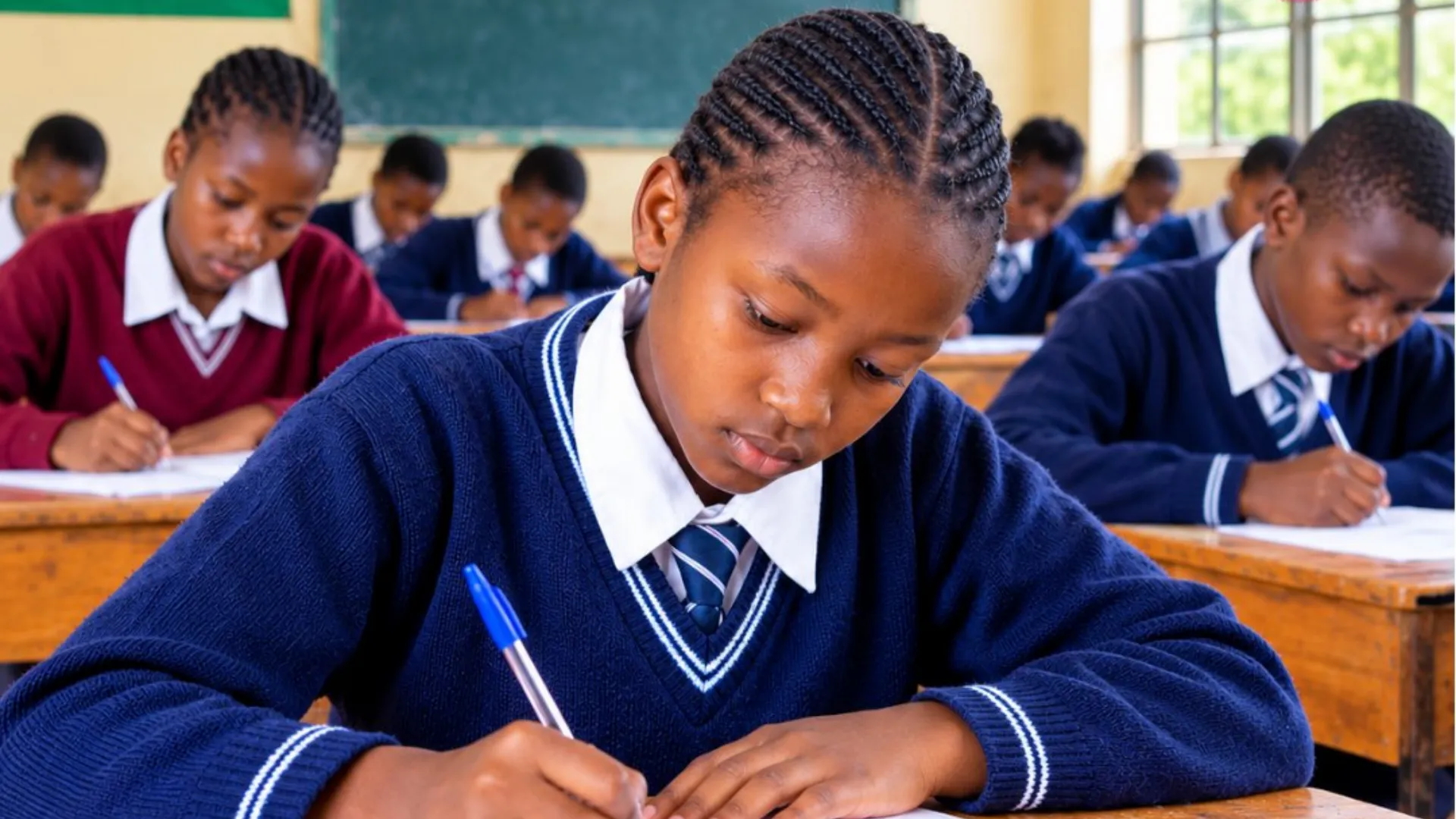
A record 3,634,846 learners are registered for Kenya’s 2026 national assessments and examinations: 1,380,463 for KPSEA, 1,206,028 for KJSEA and 1,048,355 for KCSE. It is the largest candidature the Kenya National Examinations Council has handled in one cycle, and the first time KCSE has gone past one million candidates.
The numbers at a glance
| Assessment | Level | 2026 candidates | 2025 candidates | Change |
|---|---|---|---|---|
| KPSEA | Grade 6 | 1,380,463 | 1,298,089 | +82,374 (about 6.3%) |
| KJSEA | Grade 9 | 1,206,028 | 1,130,669 | +75,359 (about 6.7%) |
| KCSE | Form Four | 1,048,355 | 996,078 | +52,277 (about 5.2%) |
| Total | 3,634,846 | 3,424,836 | +210,010 (6.13%) |
The change figures are our own arithmetic from KNEC’s published numbers. The total increase of 6.13 per cent matches the official figure.
When each assessment ran
KPSEA ran from 26 to 28 October and KJSEA from 26 to 30 October. KCSE began with low-candidature oral and practical papers on 19 October, and the large-candidature written papers run from 2 to 20 November.
What the scale means for schools
Security. KNEC says two security officers are assigned to every KCSE centre, with more for centres hosting over 250 candidates. In KPSEA and KJSEA centres, there are no armed officers except in regions with security challenges. Exam materials are held in 701 storage containers, secured with smart padlocks.
Staffing. KNEC has contracted 342,005 professionals across the exercise. For KCSE alone, that includes 10,765 centre managers, 12,274 supervisors, 57,432 invigilators and 21,388 security officers.
Rules apply at scale. With over a million KCSE candidates, KNEC has stressed its rules on phones, wristwatches and authorised personnel, covered in our week 3 guide.
What the numbers mean for parents and learners
Each cohort moves on to a different stage:
- KPSEA candidates move to Grade 7 in January 2027.
- KJSEA candidates will be placed in Grade 10 senior schools, also in January 2027.
- KCSE candidates await results in January 2027 and then university, college or TVET placement.
A larger Grade 9 cohort means more competition for places in popular senior schools, which is why the school and pathway choices made earlier matter.
The “missing learners” question
KNEC’s figures have sparked a debate. A comparison of earlier cohorts with this year’s registration shows a gap. In 2022, 1,233,852 candidates sat KCPE, but 1,048,355 are registered for KCSE in 2026, a difference of 185,497 learners, or 15.03 per cent. For KJSEA, 1,281,210 sat KPSEA in 2023, against 1,206,028 now registered, a gap of 75,182 or 5.87 per cent. Together, the gaps are 260,679 learners.
These are differences between cohort sizes, not a count of dropouts. The reports themselves note that not all unaccounted-for learners left school. Some may have repeated a class, registered elsewhere, or moved between systems. The numbers do show that fewer learners reach the final exam than started the cycle.
Read Also: KCSE 2026 Week 3 Rules: What KNEC Has Told Exam Centres
Frequently asked questions
What is the total number of candidates in 2026?
3,634,846 across KPSEA, KJSEA and KCSE.
Is this the largest number ever?
It is the largest candidature KNEC has handled in one cycle, and the first time KCSE passed one million.
When will results come out?
The Ministry has said KPSEA and KJSEA results come in December, and KCSE results in January 2027. Confirm exact dates with KNEC.